The Rise Of Smart Watches

Untitled

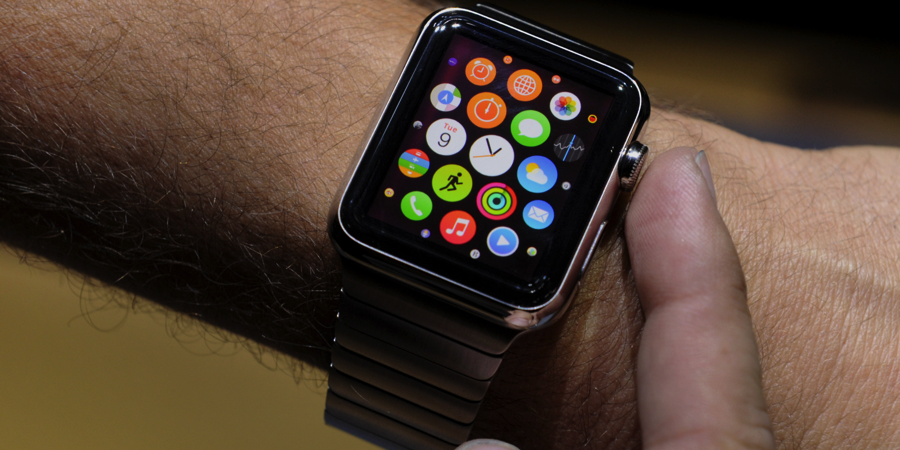
If recent patterns are any indication, smart watches are nowhere close to slowing down in either sales or sophistication. The proof is in the pudding: 6.8 million were sold in 2014, which is more than double the 3 million sold in 2013. With the release of the long prophesied Apple Watch just two short weeks ago, 2015 is shaping up to be a great year for the platform; in fact, 957,000 Apple Watches have been sold thus far. What does this mean for advertisers and developers? Much like the increase of mobile over the past decade, the smart watch platform presents both a host of new design challenges and intriguing opportunities to engage with consumers.

How can smart watches be used to sell homes? The Pilot Group Company detailed one clever possibility. Imagine you’re out for a walk, and your watch sends you an alert: a home around the corner fits your price range and specifications. With a simple voice command, your watch guides you to the house. You love what you see and decide you’d like to book an appointment. With another simple voice command, your watch sends an alert to the agent who can then contact you directly. Now imagine that same experience applied to future communities and new builds. That’s the seamless experience that the platform has the potential to offer homebuyers.

It doesn’t have to stop there either.

With the built in components that monitor health and vitals, there is the possibility of using your emotions to not only gauge your reaction to and automatically act on homes, but also to build up a profile based on your emotional response to specific elements within a home. Imagine if your physiological reaction to children at a park helped an application ascertain that you’re considering children, and thus look for homes with room to grow. Imagine if increased agitation towards loud music at night helped an application to steer clear of homes close to university housing. This is the kind of next level development that is coming down the pipeline.

Apple is estimating that they’ll be shipping 2.3 million watches in 2015 – and that’s just one maker, and one watch. With the smart watch user base rapidly growing, it’ll be exciting to see the innovative applications that will start to pop up over the next year, and how brands begin to capitalize.

Responsive Web Design Is More Important Than Ever

Untitled

Having a website that is mobile friendly is not a new concept. It’s something that marketers, designers and brands have been aware of for a while now, especially with the sharp – and consistent – rise in the use of mobile/smart devices over the years; however, ignoring or overlooking responsive design is not an option going forward. Google recently announced an update to their algorithm that affects searches made on smart devices. As of April 21st, results will now favour websites deemed “mobile friendly,” giving them higher rankings than websites that are only optimized for desktops and laptops. Considering that roughly 60% of all web traffic takes place on mobile platforms, that’s a big deal.

So what does this mean for marketers? Well, if you manage or build websites that are heavily reliant on search traffic, and you don’t meet the standards set out by Google, you run the risk of having your mobile search ranking, and consequently mobile traffic, drop. A recent study by Portent revealed that 10,000 of the web’s top 25,000 sites actually failed to meet the criteria – that’s a big reality check. There is good news, though: the algorithm is real-time, meaning sites can correct their issues, which can include things like text sizing and link spacing, and recover their former ranking.

Responsive design is something that we’re cognisant of here at BAM when we develop comprehensive online strategies for our clients. With a large portion of users accessing sites as a result of both e-blasts and mobile web searches – especially while on the go – we put emphasis on ensuring a smooth online experience, regardless of where it’s taking place. A great example of a mobile-friendly website is the one we built for our client Sean Mason, which was nominated for Best Website at the 2015 BILD Awards.

The use of smart devices is nowhere close to reaching a plateau – especially if you consider emerging platforms. As new wearable technology such as smart watches continue to push the envelope and transform the way we consume content, marketers will constantly have to adapt in order to stay ahead of the curve.

Mixed-Use Development: No Longer Just A Trend

Untitled

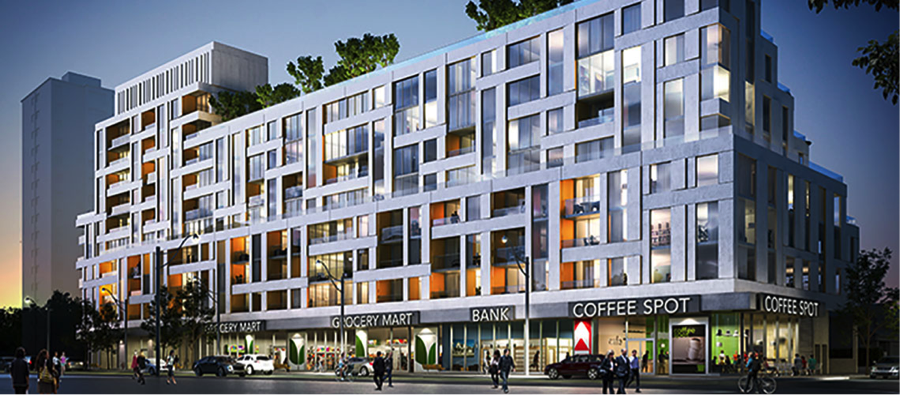
It’s official: homebuyers are increasingly comfortable passing on larger living spaces, when stacked up against urban conveniences (according to a recent report by PwC and ULI). Looking at the report, entitled Emerging Trends In Real Estate, it’s easy to see how/why mixed-use development is becoming the norm – it’s blurring industry lines as commercial and residential developers discover the opportunities that mixed-use properties bring. The desire of tenants to be able to live, work, and play in an urban location is driving further demand for projects that could offer residential, retail and office space all in one convenient location.

This isn’t a new concept. In major global markets such as Asia, you have second and third floor retails. To put it simply, this type of building is just a better use of density. It creates complete communities that offer more options – which also happens to be a direct aim of Ontario’s Growth Plan.

There are a few of our current clients that are attempting to speak to this growing trend, while addressing the concerns of homebuyers who may otherwise not be drawn to rural/suburban living – namely due to long commute times. Queensville, which is poised to become a 6000 home community, will be a place where families can live and work. This is the same for New Seaton (in North Pickering), which will become home to more than 20,000 residents and developer Sifton, who is going to be introducing a new smart community in London (Ontario). All three of these communities will include mixed-use development ranging from office spaces, restaurants and different classes of residential living spaces – communities within communities.

What was once emerging is now a norm, with our population growing (rapidly) and developers looking for ways to attract homebuyers in an increasingly competitive marketplace. The needs/wants of homebuyers are shaping and challenging development, and it’s intriguing to see how the challenges are met.

To Suburb or Not To Suburb – Population Growth Raises Dilemma for Homebuyers

Toronto’s population will increase to 6,682,061 by the year 2025, which represents a generational spike of 59.2 per cent. This will make Toronto the 24th most crowded city in the world – a rank higher than New York City. This is a huge increase and, as per the Provincial Growth Plan, this extreme growth will be managed by (among other things) intensification. This creates a new dilemma for first-time and established homebuyers – do we move up or move out?

The implication is that depending on your preference, you can either live a condo lifestyle (full of urban opportunities) or move out – meaning outside of the city core. A 2014 Home Location Preference Survey (by RBC) revealed that the latter is becoming ever more popular with 42% of respondents indicating that home buyers (assuming equal home costs) would prefer a detached home on a modest lot, townhouse or condo in a suburban location (within walk or bike to amenities). They also indicated that they’re willing to commute 30 or more minutes as long as they had access to the GO. This number is an increase from 39% in 2012. This trend is also reflective of the economic reality as 82% said that affordability affected (or would affect) their purchase.

This trend can definitely be seen when you look at the immense interest in Queensville, a development project outside the GTA core that is heavy on amenities making it possible to do everything (even work) right within your community. As well, the recent opening of the 404-highway extension creates potential for quicker (than usual) commutes into the city. Likewise communities such as Sean Homes in Barrie is more than accessible by GO Transit, and offers home buyers an amazing value.

Buyers want it all – a suburban experience with the amenities of its urban counterpart. The Provincial Growth Plan is making this a reality as a way to manage the growth of our province. What are your thoughts? Click here to check it out the 2014 Home Location Preference Survey for yourself.

Smart Homes: How Automation Technology is Transforming the Home

home auto


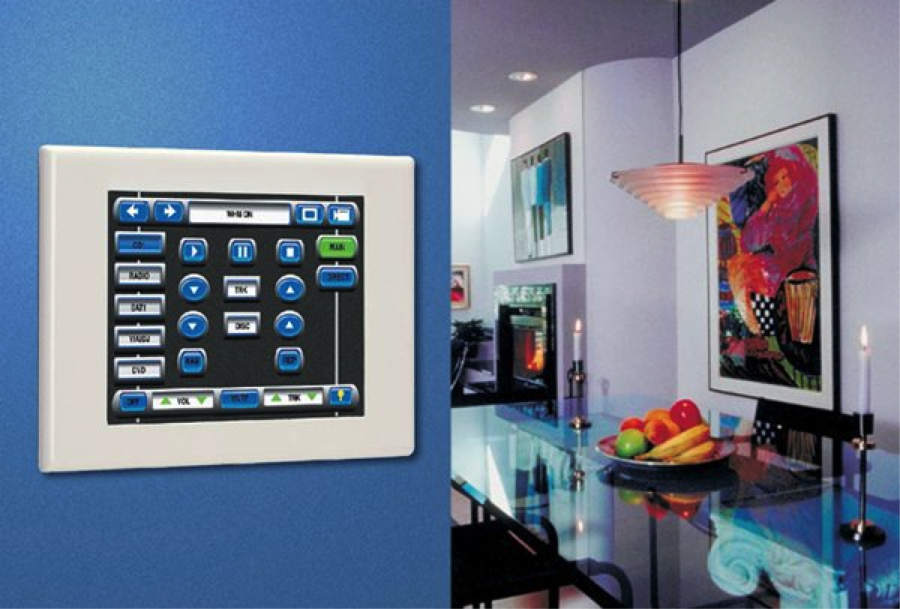
We’re all adjusted to the modern conveniences of our smart phones – but what about controlling our homes with the touch of a button? What if we could program our homes, communicate with our homes and rely on them for self-sufficiency? Believe it or not, these once outrageous seeming requests are a reality. In fact, they’re expected to continue popping up in more and more homes.

Home automation technology has been around for several decades, but the industry has been slow to take off. But, according to ABI Research, it looks like that’s about to change. They’ve projected that the home automation industry will grow to $14.1 billion in worldwide revenues by 2018. Looks like this technology is something we better get used to! At BAM, our focus will shift to encouraging builders to offer these new technologies in order to stay current and attract the younger generation. Here are four gadgets to look out for.

Smart Thermostats

The Nest Thermostat is a fine example of smart thermostats. The nest is programmable and capable of learning your habits and heating or cooling your home accordingly. The company is now rolling out a smoke and carbon monoxide alarm that connects to WiFi and interacts with the homeowner through its smartphone app.

Digital Backplash

Believe it or not, digital backplash is a growing trend for kitchens! They are installed above kitchen countertops and below cabinets where traditional backplash would go. These intelligent walls can display pictures of artwork, find your favourite recipe on the Internet or pull up your security camera feed.

Smart Lock System

Smart lock systems grant keyless access to your home though Bluetooth phone recognition technology. They also allow you to customize their lock – this means you can monitor access to your home and no more locking yourself out of the house!

Smart Kitchen Appliances

The kitchen is becoming ‘smarter’ thanks to high-tech appliances from Samsung, Miele, and LG Electronics. Smart refrigerators like LG’s keeps track of the contents inside! It does this by scanning your receipt and alerting you when an item is about to expire. It can also recommend recipes based on stored contents and when you need to replace items, you can order online via the fridge’s LCD display screen.

Further validation for automation technology can be seen inside companies around the world.  Many offices are getting on board with smart technology and teaching their employees how to stay ahead of the curve. Naturally, this translates to better customer service. If the employees are well versed in hot technology, customers are going to learn why they need it as well! Besides, who wants to live in a home with outdated technology?

So, what do you think? Is home automation technology here to stay?

Previous Older Entries Next Newer Entries