Have Canadians Had Enough Of Big Government?

If only he  could watch us now.

If only he could watch us now.

A recent National Post article had me thinking about the increasing differences between the Canada I grew up in and Canada today. Back when I was younger, people loved our then-Prime Minister Pierre Trudeau. Trudeau was righteous. Trudeau believed in big government. Trudeau believed in social care and in a just society and in protecting those who were discriminated against.

He believed, in other words, that the role of the state was to look after people, and he spent a lot of money seeing to it.

No wonder, then, that immigrants and minority members loved him. Not that they were the only ones—most Canadians seemed to revere Trudeau and what he stood for.

Fast-forward thirty years. We have a majority Tory government, and the city of Toronto, long a Liberal stronghold, just elected itself a major who, economically at least, seems to stand opposite to most things Trudeau held dear.

As if that weren’t enough of a drastic change, harsh Ontario PC leader Tim Hudak looks set to win October’s elections.

Have Canadians changed that much? Have we stopped caring for others?

Or have we simply, like the National Post article suggests, come to see the Liberal party as foreign to our beliefs? Have we had enough of politicians losing our manufacturing or increasing energy costs? (Dalton McGuinty did both.) Have we had enough of the government paying high salaries to its employees, of which there seemed to an increasing number, especially in Toronto in the days of David Miller?

Have we, in short, had enough of Big Government?

The numbers justify this possibility. According to the annual Barometer survey released Wednesday by the Manning Centre for Building Democracy, Canadians now prefer to be seen as individuals rather than as members of an identity group. They also profess to believe the government’s role is to support individual initiatives first rather than always trying to find its own solutions, and that the government should focus on creating equality of opportunity rather than trying to engineer the equality of results.

In other words, many Canadians seem to be telling the government, Leave us alone. We don’t trust you anymore. We will work hard and we will only need you to step in to lend an occasional hand when it’s really needed.

It’s no coincidence then that the Tories run on prisons, jets, police, but also on telling us what to do far less often. They run on the premise that they will empower people to let them make their own decisions—be they good or bad.

So, is this change in Canadians’ mentality good for us marketers and builders?

Sure, it might mean lower taxes and reduced operating costs. But it could also be bad news. For example, conservative governments are less likely to spend on infrastructure. And as you know, we can only build when there’s a proper infrastructure in place—water, sewage, and power lines.

If we continue to have little choice but to build in further-away communities, how will we be able to do that if the infrastructure in those communities cannot be expanded upon?

Only time will tell.

Do You Like a Good Deal?

raw coins & leaves... (part 2)

So, do you like a good deal?

If you’re Canadian, you most likely do. At least that’s what a new report says as quoted by the Toronto Star last Tuesday.

This makes sense. Who doesn’t like a good deal? Doubtless people of all nationalities are happy to pay less.

The difference, according to the Toronto Star, is that us Canadians are among the most likely in the world to “buy on a deal.”

In fact, we rank second only to Italians in deal-hunting.

Think about that. Second in the whole world.

What do these stats prove? What do the popularity surges of sites like Groupon and Toronto-based Dealfind prove?

Nothing that we didn’t know before. I’ll grant that. But they do make a stronger case that we must create a sense of urgency in potential homeowners and that we must create the perception of value.

We must give something away—or they will walk away into the arms of the next homebuilder, the one who is offering a deal.

How Badly Will Higher Gas Prices Hurt Suburbia?

on the run

The good ol’ days.

Which do you prefer: a car or a motorcycle?

If you’re like most people, you find cars hard to resist on practical merits. Rain or shine, cars can haul more passengers, not to mention that heavy IKEA dresser. And even bike lovers will admit that cars are safer.

Wondering what this has to do with suburbia? The answer lies in an economic concept called the indifference curve.

Broadly, the concept of indifference curves refers to the point where the price of a good becomes high enough that people who normally favour this good begin considering another type of good.

Take suburbs. Bigger homes in the outskirts of the city have long been a Canadian dream. It’s easy to see the appeal: homes large enough to accommodate a big family. Lawns big enough to host BBQ parties. Streets safe enough to let little Jimmy ride his bike outside.

For many years, the home building industry has helped fulfill this dream by building homes further and further away from the city. This meant people who live in the suburbs and work downtown had to commute daily. Yet many of them seemed to find this a reasonable tradeoff—provided gas prices were sensible.

But people might give up their suburban dream home as gas prices soar. And soar they have. (There was a temporary—and modest—drop towards the end of the week, but experts predict they will likely remain high for months.)

Gas prices may come back down in the future, but there are people looking to buy a house a right now. Don’t be surprised if some of them join those who have already decided to raise a family in a condo, or switch to smaller and/or older homes closer to work.

Are You A Blindfolded Home Buyer?

she burns

Thanks to recent press coverage and social media campaigns, you’re probably well aware of the lack of competition in our communications industry, which is one of the most expensive in the world.

But you may not be aware of a recent revolution in another industry, despite the fact that changes in this industry have far more of an impact on your pocket than any cell phone bill.

I’m referring to the real estate industry, which is undergoing important changes that can affect the way you buy your home. Most of these changes are good for you—provided you know of them.

If you don’t, and if you insist on using a real estate agent, you risk signing away important rights. You also risk disclosing personal information and paying more money than you should.

When the time comes for you to buy your resale home, I want you to be able to make a well-informed decision, one that will let you keep more of your hard-earned dollars where they belong—in your pocket.

This is why I have blogged before about the exclusive representation agreements that real estate agents try to get homebuyers to sign. I have also blogged about the federal Competition Bureau when it opened up the MLS system to homesellers without them having to pay huge commission rates to real estate agents.

Today I’d like to direct your attention again to Ellen Roseman’s latest column for the Toronto Star. In it, Ms. Roseman answers to many FAQs about a homebuyer’s relationship with an agent.

For example: in terms of buying a resale MLS home, do you know the difference between being a “client” and being a “customer”? Do you know if you really have to sign exclusive contracts with a real estate agent?

In my experience, a lot of people don’t know the answers to these questions. And that’s just the way many real estate agents like it.

Earth Day 2011

Earth Day has been around for over 40 years now, and tomorrow we celebrate it again. While reading today about the origins of Earth Day (thanks to Mason Homes’ twitter for the article!), I was reminded again how Earth Day has its success at such a grassroots level. It’s the individuals caring about our planet, our environment, and our health who make a difference. Governments and corporations often choose to act more sustainably but it’s because of all the individuals and families who care enough to make their voices heard.

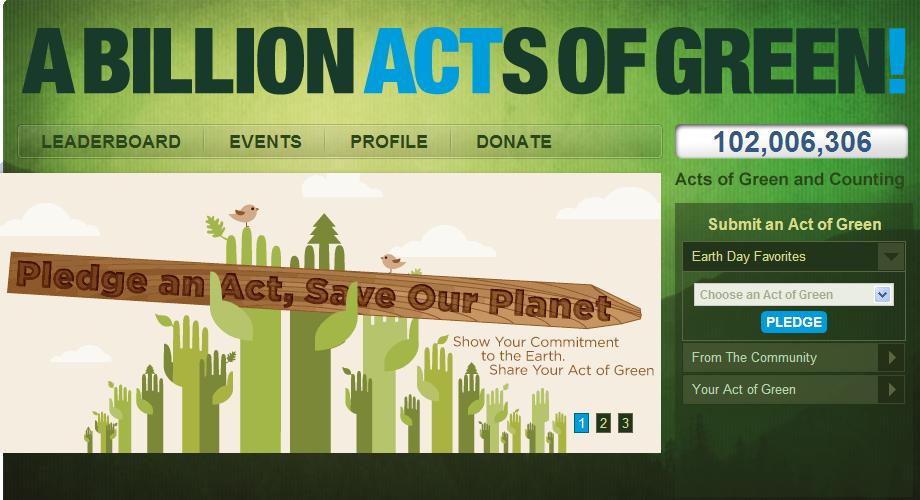
This year’s Earth Day has the theme “A Billion Acts of Green.” It won’t be one massive act that will change the way we live, but when we all act in unison, change happens.

Environmental protection and living sustainably are essential in today’s world. It’s especially a big issue in the new home builder’s world; our clients challenge themselves to build as efficiently and smartly as possible, both by trying to eliminate waste in the building process and by building homes that are energy-efficient and have features designed for sustainable living, like solar panels.

Kudos to all those trying to make a difference in the world!

Previous Older Entries Next Newer Entries