90% shop for new home online!

A study published this week confirms what we’ve been saying all along: consumers’ online experiences are increasingly influencing their home buying activity offline.

According to the report, a whopping 90 percent of homebuyers searched online during the home buying process, with 52 percent choosing that as their first step in the process.

eBAM rocks our client's online world.

For an idea of how we rock our clients’ online world, visit the eBAM section of our website.

Called “The Digital House Hunt: Consumer and Market Trends in Real Estate,” the report includes custom research from the U.S. National Association of Realtors’ 2012 Profile of Home Buyers and Sellers, combined with internal Google data and research.

Particularly interesting to BAM were three findings:

  • First, 31 percent of  home buyers who took action on a real-estate website were aged 25-34, the biggest share of any age group,
  • Second, video played an important role in consumers’ search process, specifically when they wished to find out more about a particular community, tour the inside of a home, or obtain general information,
  • Third, about one-fifth of real estate related searches occurred on mobile devices — a 120 percent year-over-year increase.

These findings confirm that video plays a major role in this online research process. They also confirm that while having an online presence will drive traffic and generate leads for any demographic, it’s especially important in the case of a community targeting younger homebuyers. (However, the data still show people of all ages do go online to research the home buying process.)

This is why we strongly recommend to all our clients that they advertise online and create SEO-optimized websites, as well as an active social media presence. As for video, we aim to revamp our efforts in 2013.

A statement from Patrick Grandinetti, Google’s head of real estate, does a fine job of summarizing the report’s findings — as well as our recommendations for the past few years:

“Online technologies are [increasingly] driving offline behaviors, and home buying is no exception. (…) The real estate industry is smart to target these people where they look for and consume information — for example, through paid search, relevant websites, video environments, and mobile applications.”

Did you read the report? Did any of its findings surprise you in any way?

Why You Should Enrol Under the Current ENERGY STAR for New Homes Standard

Energy Star building

It pays to get there soon.

I recently received a reminder that this is the final week to enrol under the current ENERGY STAR for New Homes (ESNH) Standard.

Specifically, the email stated that the deadline to enrol under the current ENERGY STAR “Common Spec” is this Friday, November 30th.

Having blogged about this before, I’ll just reiterate it’s a very good idea to enrol in the ESNH Standard by the deadline. Here’s why: ENERGY STAR homes are typically more expensive to build, yet if you enrol right now, any home you close by November 30th, 2014 can be built according to the current specifications. And since the current rules are very similar to the Ontario Building Code, you’ll be able to label these homes as ENERGY STAR-compliant, all for little to no cost.

In other words, you get to put the a blue sticker on your home for near free.

Do You Know About This Marketing Opportunity Ending Soon?

One of our best campaigns was Empire Communities’ ECO² brand. Eco-building and sustainability are essential to Empire’s identity.

Being utterly convinced that sustainability is way more than just a buzzword, I not only sit on the EnerQuality Board, but have also pushed BAM to be massively pro-green building.

This is why we’ve helped convert many clients to ENERGY STAR construction and beyond. We’ve also marketed some of the greenest builders around, winning quite a few awards in the process — builders like Mason Homes, Brookfield Homes, and Empire Communities.

In my mind, the more green builders there are, the better for the industry, for homebuyers, and for the market.

As I write, the deadline to make the most of a great opportunity looms lies just around the corner. While the industry transitions to the next generation of ENERGY STAR for Homes standard, builders may continue to build to the previous, more lenient standard — provided they register their project with EnerQuality by June 30.

This means you only have 9 days left, should you decide to follow this path. (You’ll also have to close by June 14 of next year.)

Let this tight timeframe pass, and you’ll have no choice but to build to the new, higher standards.

Marketing for Female Homebuyers: Is It Time to be Open About It?

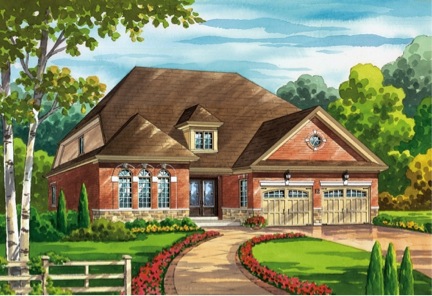
The home of your wife’s dreams?

Experience has taught me women tend to call the shots in the home buying process. If you’re in the industry, I’m sure that’s your experience as well.

This is why many of us implicitly market homes for women, highlighting the features that we think appeal to them.

But what exactly is it that female homebuyers want? Experience can certainly give you an idea. But valuable as it may be, experience is a subjective thing, especially when it’s not backed up by studies.

Thankfully, according to Builder Magazine, two U.S. builders made it a point to narrow down the factors that make female homebuyers tick, going so far as to take women-centric design studies.

They seem to have succeeded — one of them, Patcon Construction, continued to sell homes in new Hampshire and Maine even as its competitors couldn’t, while the other, Hugh A. Fisher of Deer Brook Development Corp., quadrupled his business in the middle of the U.S. housing recession.

Ironically perhaps, their findings not just confirm many a builder’s experience, but also a few gender stereotypes. For example, when men look at a floorplan they think about how they will relax in the house, while women focus on how the family will live in the house and how they will work in it.

Women also tend to focus on organizing, having convenient access to laundry rooms, and making sure their husbands have a place where they can drop their wallet and keys (which apparently they don’t want us dropping on the kitchen counter).

Read the article here, or check out this survey, which helps women find the type of floorplan that best suits their personality.

Have you ever marketed homes explicitly for women? What’s your take on all this?

Do You Know Everything You Should About the 2012 Ontario Building Code?

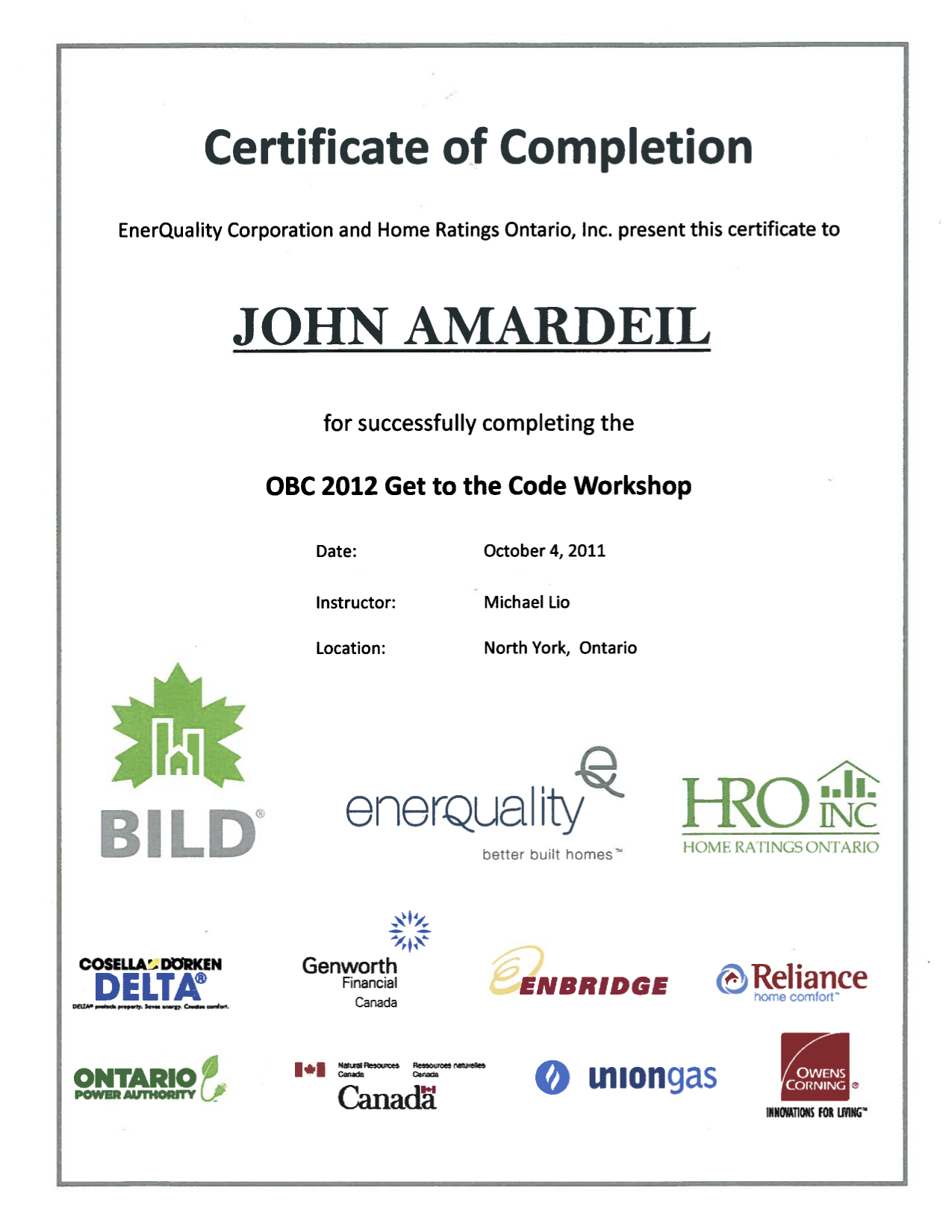
It didn’t really shock me, upon reading my blog’s 2011 summary, that the year’s most frequently viewed and commented-upon post was Summary of Changes Introduced in the 2012 Ontario Building Code, which I wrote after attending the OBC 2012 Get to Code Workshop last October. The second most popular post also dealt with 2012’s OBC.

Not all diplomas are valuable. This one is.

Obviously, people out there have an interest in the new code. And so they should: as I explained in the aforementioned articles (as well as this one), the new code stands to simplify builders’ lives. Of course, it also ensures Ontario homeowners get a better product for their money and that the environment gets preserved.

While I remain open to questions and comments, I highly recommend to all our clients and all Ontario builders that they register for one of these upcoming seminars (the first is on February 6 and the second on February 8).

Hurry, though — they do sell out quickly.

Previous Older Entries Next Newer Entries