Back to Basics: The Importance of the PDI in Selling Homes

My new townhome on the day of our PDI

My new townhome on the day of our PDI.

In the course of a career that spans over three decades, I have witnessed first hand the many changes our industry has undergone. In fact, BAM has contributed to some of these changes, and for that I am proud.

But in many other ways, our industry is still the same.

For one thing, it’s still perceived as lacking in the customer-service department—rightly so in my opinion.

Take the Pre-Delivery Inspection, the process during which homebuyers inspect their near-finished home before they move in.

We refer to it as PDI; homebuyers likely call it one of the most frustrating days of their lives. We see it as a straightforward process; homebuyers look forward to it for months. We’re indifferent; they’re thrilled.

That’s why a PDI can make a huge difference to both parties. When done properly, it will reassure the buyer that they made the right decision. More importantly, they are more likely to tell their family and friends how happy they are and how beautiful their home’s going to be. They might even tell their boss and their coworkers, who know where they were because they took the morning or afternoon off.

But a PDI that’s not done properly will have the opposite effect on your homebuyer. They will mutter and grumble. They will flood you with complaints. They will go on Facebook and talk about how awful it was. And they will tell their family and friends and coworkers and boss.

By done properly, I mean a PDI should:

  • Take place in a house that’s ready,
  • Take place after the customer’s expectations are managed ahead of time, and
  • Be run by a qualified person — one who not only has good communication skills, but who also cares about details and customer satisfaction. In other words, said person should not be outsourced to an outside company.

A lot of the things customers are displeased about when they do their PDI can’t be avoided. Many expect their home to be in pristine condition; in their minds, it’s going to look as good as the day they move in.

But that’s where managing their expectations comes in, whether you have someone do it over the phone, or better yet, as part of the home buying process, in a workshop or homebuyer seminar, which many good builders offer.

We are so involved in what we do we sometimes forget the magic of it all, especially in the eyes of a family who has just bought their new home. It pays to keep that in mind, and few things show homebuyers you understand where they’re coming from as a properly conducted PDI.


Is Your Receptionist The Best Person To Handle Your Company’s Social Media Presence?

Assuming you agree your company should be on social media, the next question becomes: Who do you assign to handle it?

Sadly, when many companies ponder that question, they follow these two steps:

  • First, they figure out who the youngest person in the company is (the reasoning being, I guess, that all young people know social media),
  • Next, they figure out whether that person’s workload can accommodate social media (the answer, most of the time, is yes; after all, social media can’t possibly demand more than a few minutes per day, right?)

As you hopefully know, this is the wrong approach.

In fact, it’s so wrong, you’re better off not being on social media at all rather than doing it like this.

Why?

Because even if social media were as simple as some people make it out to be, it still becomes a reflection of your entire company. 

Not necessarily the best person to handle your social media.

Not necessarily the best person to handle your social media.

Why social media is (not) about you

As this blog post from The Creative Group rightly points out, social media is not really about you.

It’s about who you’re speaking to: your customers.

The ones that give you their money. The ones that make your company’s existence and your very livelihood possible.

Your customers choose to follow and engage with your company on social media channels because they hope to find value in the content you share with them. 

They hope their concerns will be addressed. They hope they will be understood and appreciated and entertained.

And if they aren’t, well, chances are a competitor will do that for them.

That’s why, ironically enough, the key to making social media work for you is to make it about somebody else. 

Do that, and your fans and followers will take notice.

So why not the receptionist?

For all the above reasons, it’s paramount you find the right person to handle your social media.

It doesn’t matter whether they’re from the marketing department or the PR department or the sales department.

(It doesn’t even matter if they’re the receptionist.)

What matters is that the person have a background in social media and online marketing. It matters that they’re decent writers, understand customer service, and do a good job of interacting with various staff in your company to extract the information they need. 

What’s more, this person should know and understand your company’s culture inside out. 

Is this a lot to ask for? Probably.

Indeed, chances are good you already employ someone with this experience and traits, in which case you likely have a successful social media presence already.

But if you don’t, you owe it to yourself to hire a solid social media professional. 

Or if you’re outsourcing your marketing needs, find out whether said company offers an integrated solution that covers (like BAM does) social media, email marketing, signage, print materials, and general strategy, so that your messaging is cohesive and integrated.

(It helps, of course, if they’ve won awards for their work on social media.)

Whether you hire outside your company or not, please understand everyone at your company should be on board with social. This means your company should have an integrated plan that draws from the strengths of multiple departments, and they should know that it’s not about them — it’s about the audience and the customers.

Robots are Your Friend: Why I Stopped Worrying and Learned to Love the Drone

In today’s techie environment it’s easy to take progress for granted. We almost expect every new product, gadget, gear or gizmo to break boundaries. We suffer from innovation expectation.

When I think back to my early days and how much the social and business climate has changed I wonder what could possibly be next. With all the talk of technology’s evils we often forget the great opportunities progress has provided us with. We’re more connected than ever, more frequently in the know and have no shortage of convenience. All thanks to progress.

The thought recurred to me while working on our client Byron Hill’s new project, in Pierson Lakes, New York. Developed in the serenity of a forest and overlooking the beauty of two remote lakes, the region is located only 29 miles from the centre of Manhattan.

We were faced with some challenges of how to best capture the top-down beauty of the area while still retaining the important details of individual homesites. The solution we came up with was simple, robot drones.

Our film crew went out to Pierson Lakes with a radio-controlled quad-copter, mounted with a hi-def video camera and the results speak for themselves. I especially liked the shot that began in a living room and flew out of a balcony door to soar above the lake.

Real Estate Pessimists Proven Wrong

Image

The success of communities like TEN 88 is hardly a surprise when you look at how quickly consumers are buying this summer.

Much has been written in the press lately about the real estate market’s poor performance.

But according to recent Market Watch report released by the Toronto Real Estate Board, July’s sales represent the best July since 2009.

In fact, it’s the third best July on record.

This despite tighter mortgage insurance rules that were implemented last year, such as the one cutting the maximum length of an insured mortgage to 25 years from 30.

Of course, it’s also quite possible that many potential buyers who put their decision on hold then are now back in the market.

And although semis in the 416 area saw the biggest year-over-year boost in sales, increasing by 28.8 per cent, semi-detached homes in the 905 followed closely behind with a 26.4 per cent jump in transactions.

That’s good news for our clients, many of who sell in the 905 area. After all, though these are resale stats, the findings should spill over into the new homes market when resale prices go up and/or supply decreases.

Read the report here (PDF). 

Two Lives, One Platform

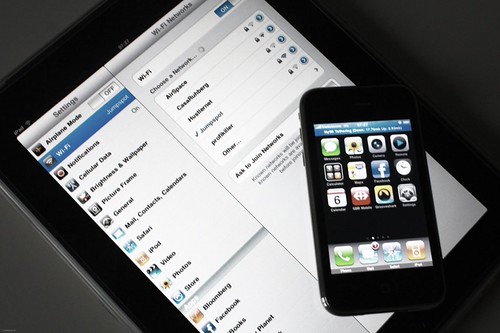
iPhone as WiFi-Hotspot

When I wrote about switching BAM to a Mac and iOS environment last year, I didn’t expect the post to be as popular as it was. But it clearly struck a chord with a lot of people who are looking for a practical solution to their organizational and communication needs, whether personal or corporate.

Having recently come across a Fast.co article in which well-known entrepreneurs talk about their favourite tools, I was reminded yet again of the degree to which many of us rely on technology as we go about our everyday lives.

I for one have come to rely on my iPad and iPhone so much that I carry them both around, sometimes using them almost simultaneously.

What’s more, I use my iPhone for my personal needs as much as I do for work. (I don’t know about current BlackBerry users, but that never was the case for me back when I had my own BlackBerry.)

My favourite iOS apps include:

Which tools do you use on an everyday basis, whether for work or for your personal life? Which platform are you and your company using?

Previous Older Entries Next Newer Entries